Sliding Door vs Swing Door Wardrobe: Which Is Better for Your Bedroom?
Choosing the right wardrobe is an important part of bedroom planning. Apart from deciding the colour, material and overall appearance, homeowners also need to consider how the wardrobe doors open and how much space is available in front of the cabinet.
Two common options are sliding door wardrobes and swing door wardrobes. Both can provide practical storage, but they work differently in terms of space requirements, accessibility, design and daily usage. Understanding these differences can help homeowners choose a wardrobe that fits their bedroom layout and lifestyle.
A wardrobe should not be selected based on appearance alone. The available floor space, bed position, walking clearance and internal storage arrangement all affect whether sliding or swing doors will be more convenient in everyday use.
What Is a Sliding Door Wardrobe?
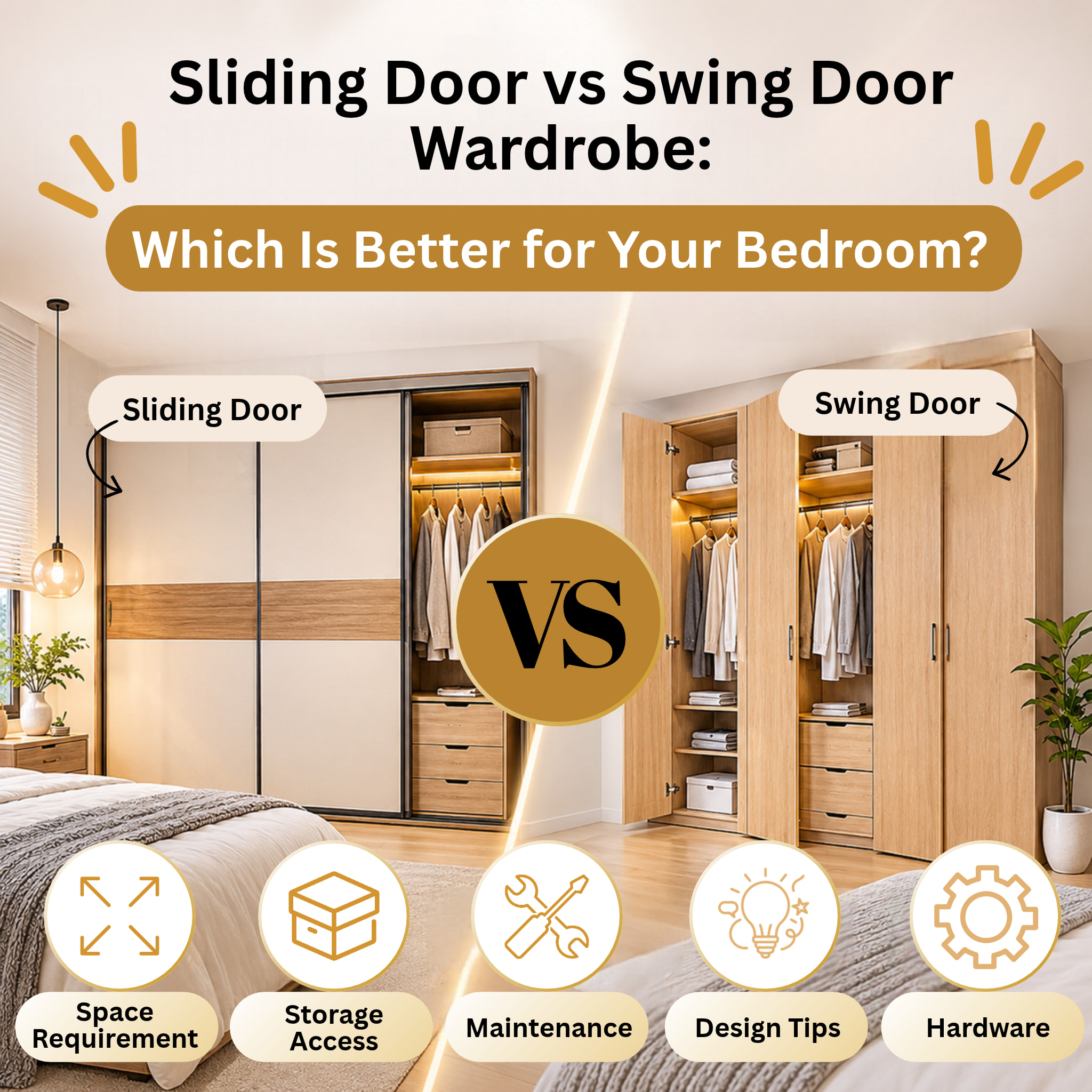
A sliding door wardrobe uses door panels that move horizontally along tracks. Instead of opening outwards into the bedroom, the panels slide from one side to another to provide access to the internal storage compartments.
This design is commonly considered for bedrooms where floor space is limited or where furniture is positioned close to the wardrobe. Since the doors do not swing outwards, homeowners do not need to reserve the same front-opening clearance required by traditional hinged doors.
Sliding wardrobes can also create a clean and modern appearance. Large door panels can provide a simple exterior, while different finishes, colours and mirror surfaces can be considered to match the bedroom interior.
- Space-saving opening: Doors move along tracks without requiring additional outward door clearance.
- Modern appearance: Large door panels can create a clean and streamlined wardrobe design.
- Suitable for compact rooms: Can be useful when a bed or other furniture is positioned near the wardrobe.
- Different finish options: Available in various colours, textures and panel combinations depending on the design.
What Is a Swing Door Wardrobe?
A swing door wardrobe, also known as a hinged door wardrobe, uses hinges attached to the cabinet structure. The doors open outwards, allowing homeowners to access the internal compartments directly.
One of the main advantages of this design is that the wardrobe can be opened more fully, making it easier to view and access the internal storage. Depending on the cabinet layout, homeowners can open multiple doors to access different sections at the same time.
Swing door wardrobes also offer flexibility in terms of door design. Homeowners can consider different panel styles, handle designs, finishes and door proportions to complement the bedroom interior.
- Full access: Individual doors can open widely to provide access to the internal compartments.
- Easy organisation: Multiple wardrobe sections can be opened for a clearer view of stored items.
- Flexible design: Suitable for different door styles, handles and decorative finishes.
- Accessible storage: Drawers, shelves and hanging sections can be positioned behind individual doors.
Sliding Door vs Swing Door Wardrobe: 6 Key Differences
Although both wardrobe types can provide sufficient storage, their opening mechanisms affect how homeowners interact with the cabinet. Here are six important differences to consider before making a decision.
| Consideration | Sliding Door | Swing Door |
|---|---|---|
| Opening Style | Moves horizontally along tracks | Opens outwards using hinges |
| Floor Space | Requires less front clearance | Needs space for door opening |
| Access | Usually one section at a time | Wider access when multiple doors open |
| Hardware | Sliding tracks and rollers | Hinges and door handles |
| Maintenance | Track and roller maintenance | Hinge adjustment and maintenance |
| Design | Large, streamlined panels | Individual door panels and styles |
Which Wardrobe Is Better for Small Bedrooms?
For smaller bedrooms, sliding door wardrobes are often worth considering because the doors do not need to swing outwards. This can help preserve the available walking space, especially when the wardrobe is installed opposite a bed or beside other furniture.
However, sliding doors are not automatically the best option for every compact bedroom. Homeowners should also consider the wardrobe depth, the number of door panels, the internal storage layout and the amount of access available to each compartment.
Swing door wardrobes can still work well in smaller rooms when there is enough clearance for the doors to open. A carefully planned door width and cabinet position can make a hinged wardrobe practical without affecting the main walking area.
Before finalising the design, it is useful to measure the distance between the wardrobe and the bed, as well as the position of nearby doors, windows and other furniture. These details help determine which opening system will work better in the actual room.
Which Wardrobe Provides Better Storage Access?
Storage access is another important difference between sliding and swing door wardrobes. While both designs can include hanging sections, shelves and drawers, the way the doors open affects how easily homeowners can reach different areas.
With a sliding door wardrobe, one panel may cover part of the cabinet opening while another section is being accessed. This means homeowners may need to move the door panel to reach different storage compartments.
With a swing door wardrobe, the doors can be opened individually or together, depending on the available clearance. This provides a wider view of the internal compartments and can make it easier to organise clothing and accessories.
For households that frequently use different wardrobe sections, the internal layout should be planned carefully. Hanging areas, drawers, shelves and accessory compartments should be positioned according to daily storage habits.
The most practical wardrobe is not necessarily the one with the most compartments. It is the one that allows homeowners to organise and retrieve their belongings comfortably.
Wardrobe Hardware: Tracks vs Hinges
The opening mechanism is an important part of wardrobe performance. Both sliding and swing door wardrobes depend on suitable hardware to operate smoothly and consistently.
Sliding door wardrobes use tracks and roller systems to move the door panels. The quality of the track, roller mechanism and installation alignment can affect how smoothly the doors operate.
- Check that the sliding tracks are properly aligned.
- Choose suitable roller systems for the door panel weight.
- Keep the tracks clean to reduce dust and debris accumulation.
- Check that the doors move smoothly without unnecessary resistance.
Swing door wardrobes use hinges to support the door panels and allow them to open and close. The number and type of hinges should be selected according to the door dimensions, weight and design.
- Use suitable hinges based on the door size and weight.
- Check door alignment to maintain consistent gaps.
- Consider soft-close hinges for quieter operation.
- Inspect the hinges periodically and adjust them when necessary.
Which Wardrobe Is Easier to Maintain?
Both wardrobe types can remain functional for everyday use when the hardware is suitable and properly maintained. However, their maintenance requirements are slightly different.
Sliding door wardrobes require attention to the tracks and rollers. Dust or small debris can accumulate along the track area over time, potentially affecting the movement of the panels. Keeping the tracks clean and checking the roller mechanism can help maintain smooth operation.
Swing door wardrobes mainly require attention to the hinges, screws and door alignment. If a door becomes uneven or does not close properly, the hinges may need adjustment.
In both cases, good installation and suitable hardware selection are important. Homeowners should also avoid placing excessive weight on doors or forcing the opening mechanism when resistance occurs.
Is a Sliding Door or Swing Door Wardrobe More Expensive?
The cost of a custom wardrobe depends on several factors, and the door opening system is only one part of the overall quotation. It is not always accurate to assume that sliding doors are more expensive or that swing doors are always the cheaper option.
Sliding door wardrobes require suitable track and roller systems, while swing door wardrobes require hinges and other supporting hardware. The final cost will depend on the specifications and quality of the selected components.
Other factors that can affect the total wardrobe cost include:
- Wardrobe dimensions: Overall height, width and depth affect the amount of materials required.
- Cabinet materials: Different board specifications and finishes can have different costs.
- Door design: Plain panels, decorative finishes and mirror panels can affect the quotation.
- Hardware specifications: Tracks, rollers, hinges, handles and soft-close systems contribute to the overall cost.
- Internal configuration: Drawers, pull-out accessories, shelves and hanging systems affect the final design.
- Installation requirements: Site conditions and installation details can also influence the project scope.
How to Choose the Right Wardrobe for Your Bedroom
Before choosing between sliding and swing doors, homeowners should evaluate the actual bedroom layout and how the wardrobe will be used. The following considerations can help narrow down the most suitable option.
- Measure the Available Space: Check the wall dimensions and the distance between the wardrobe, bed and other furniture.
- Consider Door Clearance: Determine whether there is sufficient room for swing doors to open without hitting nearby furniture.
- Identify Your Storage Needs: Plan the number of hanging sections, shelves, drawers and accessory compartments required.
- Think About Daily Usage: Consider how frequently different wardrobe sections will be accessed and whether full cabinet visibility is important.
- Select Suitable Hardware: Compare the available track, roller and hinge specifications rather than choosing based on appearance alone.
- Match the Bedroom Interior: Select door finishes, colours and handles that complement the bedroom design.
- Confirm the Full Design Before Fabrication: Review the dimensions, door arrangement, internal storage and hardware specifications before production begins.
Why Custom Wardrobe Design Makes a Difference
Standard wardrobe sizes may work for some bedrooms, but not every room has the same wall dimensions or furniture arrangement. Built-in wardrobes can be planned around the available space, allowing homeowners to discuss the cabinet height, width, internal compartments and door configuration according to their requirements.
For example, a bedroom with limited clearance between the bed and wardrobe may benefit from a sliding door design. Another bedroom with sufficient opening space may be more suitable for swing doors, particularly when the homeowner prefers wider access to the internal storage.
Custom wardrobe planning also allows the external appearance and internal storage arrangement to be considered together. This helps create a cabinet that works with the bedroom layout instead of simply filling an available wall.
For homeowners planning multiple built-in cabinets, it is also useful to coordinate the wardrobe finishes and design details with other storage areas in the home.
Custom Wardrobe Solutions by Ji Build
Ji Build provides custom cabinetry solutions for homeowners looking to create practical and well-planned storage spaces. Our approach focuses on understanding the available room dimensions, storage requirements and design preferences before moving towards fabrication and installation.
When planning a custom wardrobe, homeowners can discuss different door configurations, internal storage arrangements, cabinet finishes and hardware options according to the bedroom layout.
Homeowners in Puchong and surrounding Selangor areas can contact Ji Build to discuss their bedroom measurements, wardrobe requirements and preferred design before deciding on a suitable custom wardrobe solution.
Sliding vs Swing Door Wardrobe: Final Checklist
Before confirming your wardrobe design, use this checklist to review the most important details:
- Measure the available wardrobe wall dimensions.
- Check the clearance between the wardrobe and the bed.
- Determine whether outward door opening will affect walking space.
- Decide whether sliding or swing doors suit your daily usage.
- Plan hanging areas, shelves and drawers according to your storage needs.
- Compare the suitable track, roller or hinge systems.
- Select cabinet materials and finishes that match your bedroom.
- Check whether the wardrobe doors can open comfortably without obstruction.
- Review the full wardrobe layout before fabrication.
- Confirm the quotation and hardware specifications before proceeding.
Planning a custom wardrobe for your bedroom? Share your room dimensions, floor plan or preferred wardrobe design with Ji Build. Our team can discuss the available space, door configuration and storage requirements to help you plan a suitable wardrobe for your home.
Want to explore more cabinet ideas? Visit Ji Build to learn more about our custom cabinetry solutions and explore our other cabinet design guides.